John’s Files 02 - The Hum at Whittier
Some sounds remember who heard them.
Recovered from USB folder: /AUDIO/WHITTIER/ROOM_412/
Original blog status: vanished
Recovered by: Jean Phil Sorrowfield
File condition: partial blog draft, three damaged WAV files, one spectrogram image
Pattern tag: 0101
Assigned sequence number: 10,000
Location: Whittier, Alaska
Field visit: 2016
Archivist’s Note
This file was recovered from a folder that opened only after the Lead Masks Case was copied out of the USB.
The folder contained ten thousand empty text files before the audio files appeared.
Their names were sequential:
pulse_0001.txt
pulse_0002.txt
pulse_0003.txt
All the way to:
pulse_10000.txt
Every file was blank.
The audio appeared only after the final blank file was opened.
John’s original blog entry was incomplete, but enough remained to reconstruct the following.
John’s entry begins below.
1. Opening Note
I left Whittier with a silent recorder.
A week later, the same frequency appeared in the background of an unrelated phone interview.
101 Hz.
Ten-second pulse.
Low amplitude.
No source.
The sound had followed me home.
That was the first line of the draft I wrote before I deleted the whole thing.
The second line was worse:
It learned her pitch.
2. Public Record
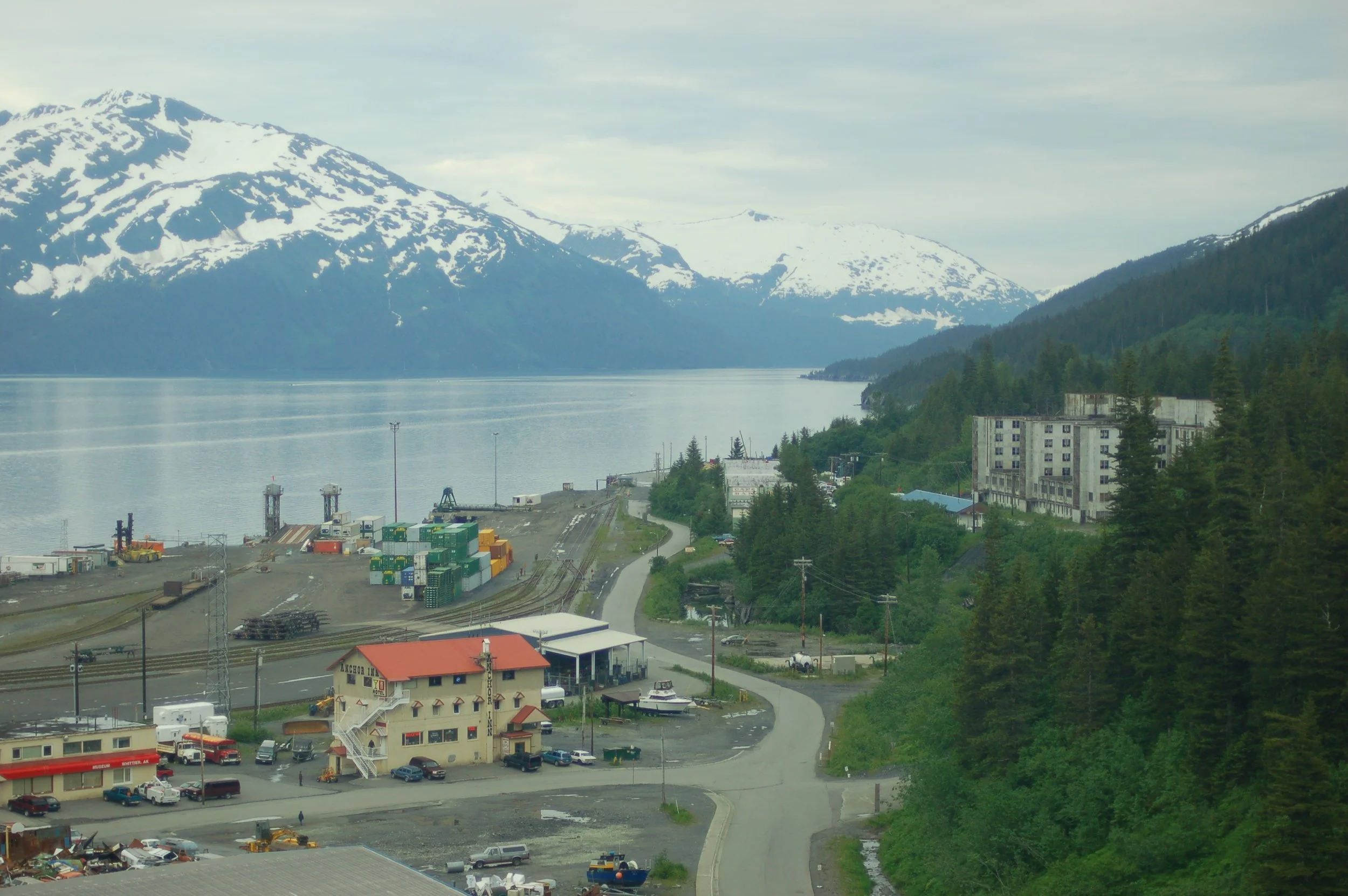
Whittier sits between mountain and sea. Nearly everyone in town lives inside one massive building. The tunnel closes at night, and after that, the place feels less like a town and more like a sealed instrument.
I went because of the hum.
Not because it was famous. It was not famous enough. That was part of the problem.
Locals described a persistent low-frequency vibration. A refrigerator hum. Water behind the walls. A machine that never turned off.
The kind of sound people stop mentioning when no one believes them.
I had seen that pattern before.
First the reports.
Then the ridicule.
Then the silence.
Then the sound remains.
Whittier had all four.
3. Field Entry
I stayed in room 412.
The building vibrated faintly before midnight. Drawer handles trembled. Water in a glass formed little rings against the rim. At first, I thought it was plumbing, or ventilation, or some deep mechanical resonance in the frame.
That was what I wanted it to be.
The recorder caught the dominant frequency:
101.02 Hz
Pulse interval:
10 seconds
Same interval as Brazil.
I wrote it down and hated the neatness of it.
Neat patterns in messy places are not comforting. They feel placed.
At 03:10 AM, the emergency lights flickered. The outage lasted nine seconds. When power returned, the hum resumed louder than before.
Not louder exactly.
Closer.
4. Witness Notes
I did not use full names in the original post. I still will not.
Maintenance worker
“We replaced generator mounts last year. Didn’t change a thing.”
Retired teacher
“Sometimes it sounds like water running through the ceiling. But there’s no pipe up there.”
Student, recorded 2016
“I dream it’s calling from under the floor. My mom says it follows her when she leaves town.”
I circled that last sentence until the pen tore the page.
Follows.
The Lead Masks file had the signal waiting on a hill.
Whittier had the signal moving.
5. Technical Notes
Recorder: Sony PCM-M10
Sample rate: 44.1 kHz
Dominant frequency: 101.02 Hz
Average amplitude: -32 dB RMS
Pulse interval: 10 seconds
Outage duration: 9 seconds
Blank pre-recovery files on USB: 10,000
The spectrogram revealed secondary modulations under the tone. They appeared every 0.42 seconds, irregular but not random.
I described them in my notes as “voiced consonants trapped under machinery.”
When isolated, they formed fragments:
here
hear
me
I ran the file three times.
Same result.
On the fourth pass, the software crashed.
The raw audio stayed intact.
The filtered export was gone.
6. Personal Log
Audio Note 2B
I filtered the recording at home.
The hum thinned out and something underneath began to move.
A higher voice.
Small.
Deliberate.
It said my name.
Not clearly. More like breath through water.
I compared the pitch to an old clip of Lilly humming during her sixth birthday. I should not have done that. I know that now. There are doors the grieving open because no one is there to slap the key out of their hand.
Fundamental tone: 101 Hz
Second harmonic: 202 Hz
Pitch variance: within acceptable match range
I wrote:
Same.
Then:
No.
Then:
No. No. No.
I stopped playback.
The tone continued from inside the speakers.
7. Working Hypothesis
The reasonable explanation is architectural resonance.
The mountain, the tunnel, the building frame, and atmospheric pressure form a chamber. A natural Helmholtz resonance. A town shaped like an instrument.
That explanation accounts for the hum.
It does not account for the voice.
It does not account for the repeated 101 Hz signature.
It does not account for the same tone appearing in my apartment after I left.
My revised hypothesis is less acceptable:
Low-frequency vibration can act as a carrier for emotional residue. Not memory, not speech, not at first. Pressure. Fear. Grief. Repetition.
But if the carrier repeats long enough, and if a person listening has already been broken in the right shape, the sound may begin to borrow from them.
A name.
A pitch.
A daughter.
8. Pattern Notes
Brazil: 101 Hz
Whittier: 101.02 Hz
Brazil: 10° slope
Whittier: 10-second pulse
Brazil: 22:10 electrical event
Whittier: 03:10 outage
USB blank files: 10,000
Pattern root: 0101
A hidden metadata string in the spectrogram image read:
3282025_REALITY_RECONSTRUCTED
I did not add it.
The file creation date was impossible
9. Closing Entry
If you have lived in Whittier or anywhere a low hum persists, record one minute of ambient sound at night.
Do not enhance it.
Do not isolate it.
Do not loop it.
And if it centers near 101 Hz, leave the file alone.
Some sounds remember who heard them.
John
Archivist’s Closing Note
This file is the first recovered entry where Lilly appears not as memory, but as imitation. From this point forward, John’s blog becomes less investigative and more personal.
That is where the danger begins.
— Jean Phil Sorrowfield
